
School Information
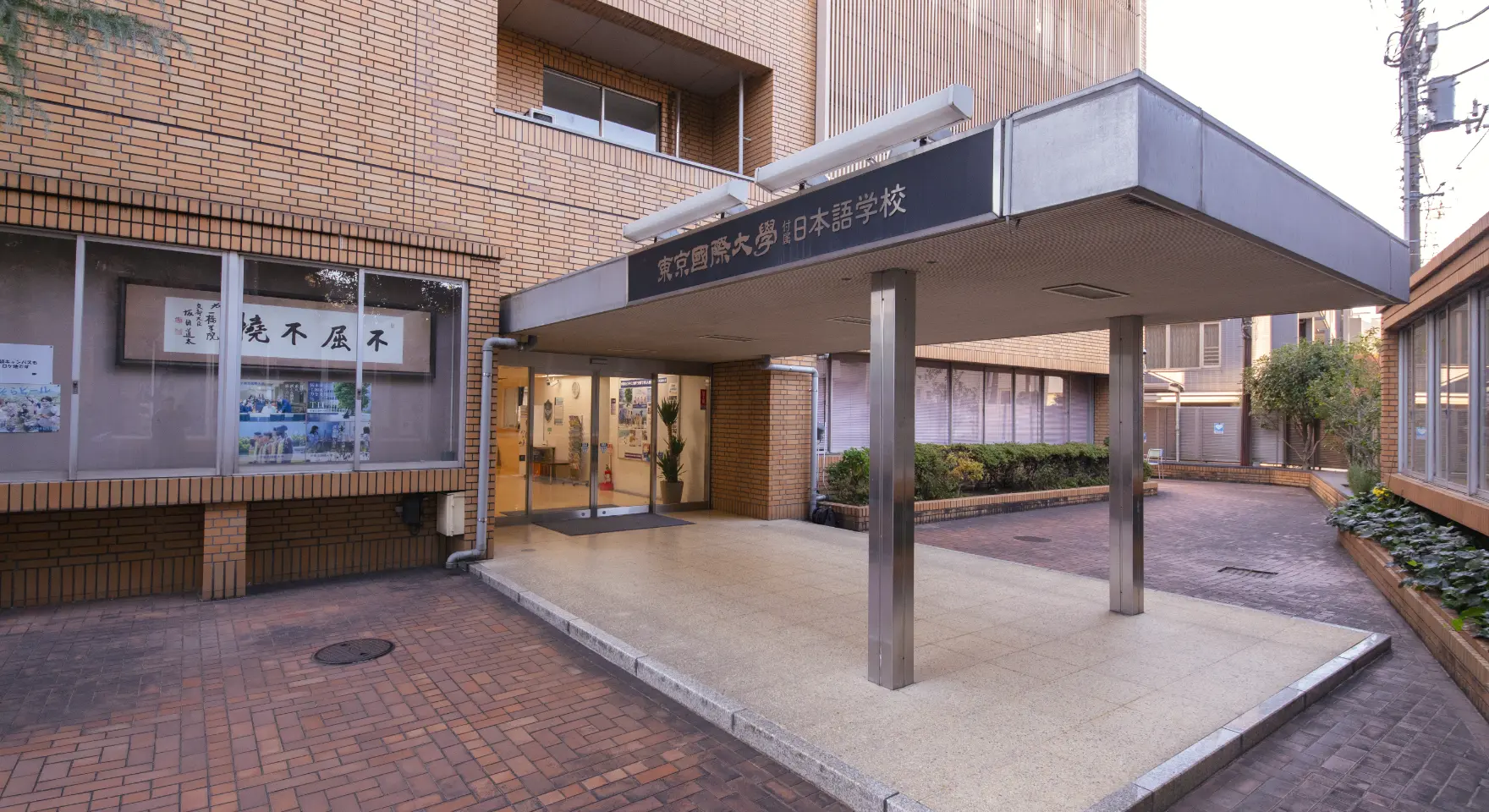
A Long-Established Japanese Language School Affiliated with Tokyo International University
With a long history as a Japanese language school affiliated with a university under an educational foundation, our school is a trusted educational institution among the many Japanese language schools.
Tokyo International University, our parent institution, welcomes international students from around the world and actively promotes international exchange. With 1,800 international students enrolled, it ranks among the top universities nationwide.Our affiliated Japanese language school was established to further develop the expertise and network of international exchange gained through interactions with these international students and faculty at Tokyo International University.
Our curriculum is designed to prepare students for entrance exams to graduate schools, universities, junior colleges, and vocational schools, while also incorporating a flexible course structure that takes into account the increasingly diverse needs of our students.Furthermore, by effectively combining Japanese language study with test preparation for university admission and employment, we strongly support each student in achieving their goals and help them realize their aspirations for studying abroad. You may have various concerns about studying in Japan or choosing a Japanese language school. However, once you step through our doors, those concerns will surely be put to rest. Come study with us and make your goals a reality!
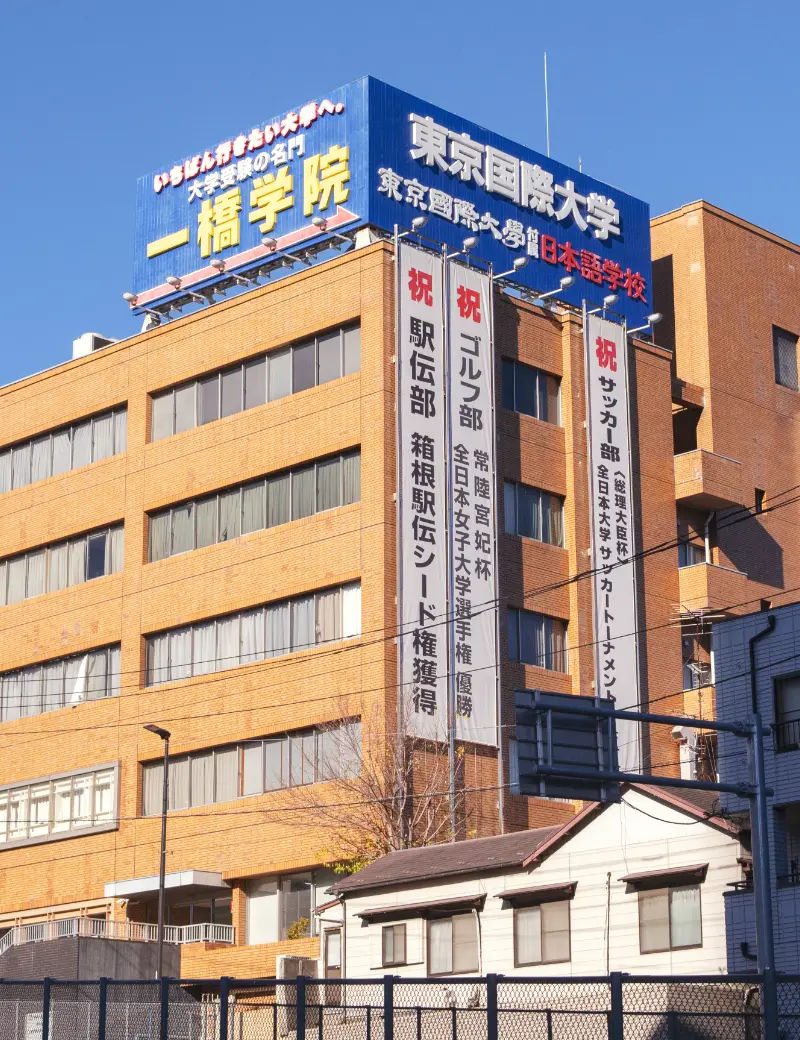
Chancellor's Message
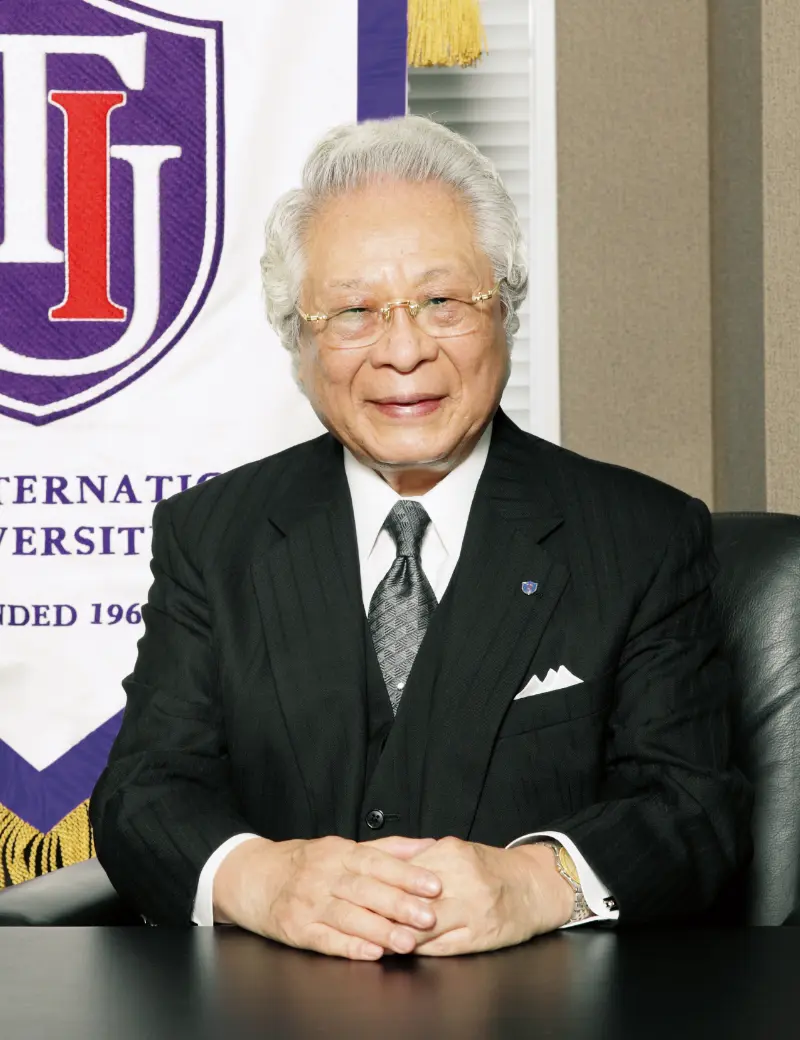
Japanese: A Language of the World
At the Japanese Language School affiliated with Tokyo International University, young students from countries all over the world gather to receive a comprehensive Japanese education, enriched with opportunities to experience and learn Japanese customs and the structure of Japanese society. As our school name indicates, the Japanese Language School affiliated with Tokyo International University is well renowned among Japanese language schools as an educational institution directly connected to an established university. Accordingly, students who study at our school are able to exchange information firsthand about Japanese vocational schools, universities, and graduate schools with exchange students enrolled at Tokyo International University. Japan adds to economics, education, culture, technology, and medicine in the international community, contributing to the world across all fields as a developed nation. By studying and mastering Japanese, the occasions open for your active participation in this world will broaden with your future. We hope that you take this opportunity at the Japanese Language School affiliated with Tokyo International University to cultivate Japanese abilities that you can put into practical use in the international community.
Tokyo International University Foundation
Chancellor and Chair
Nobuyasu Kurata
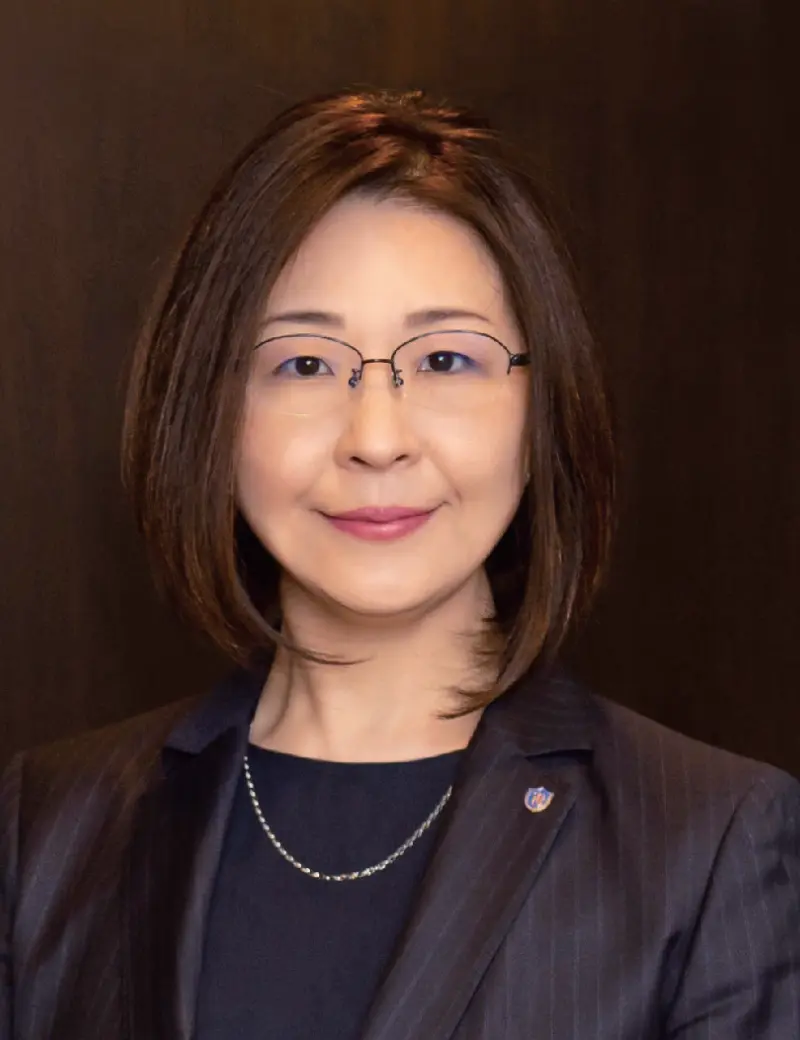
Principal's Message
Toward the realization of future dreams
Our school opened in 1987 as an affiliated school of Tokyo International University. Since its opening, the school has been offering a curriculum that provides a full range of Japanese language education, and is regarded both in Japan and abroad as a Japanese language school that has strength in preparing students to enter graduate schools and universities. Studying abroad is the first step to challenge the new version of yourself. Interacting with people that have various cultural and social backgrounds is not only a great opportunity to acquire language and specific knowledge, but also a great chance to deepen your understanding of the country and its people. In order to help you fulfill your purpose of coming to Japan, our staff will provide you with individual guidance in all aspects of your daily life and detailed career guidance, fully supporting your career path. We hope that your study in Japan will become a big step toward realizing your dreams for the future, and that you will grow up to be active players in the global stage.
Japanese Language School Affiliated with Tokyo International University
Principal
Shizuka Kurata
Overview of Japanese Language School Affiliated with Tokyo International University
- Establishing Body
-
Tokyo International University Foundation Chancellor and Chair, Nobuyasu Kurata
- Establisher's Address
-
4-23-23 Takadanobaba, Shinjuku-ku, Tokyo 169-0075
- School Name
-
Japanese Language School Affiliated with Tokyo International University
- Principal
-
Shizuka Kurata
- Year of Establishment
-
April 1, 1987
- School Address
-
4-23-23 Takadanobaba, Shinjuku-ku, Tokyo 169-0075
- Phone number
-
03-3371-6121 (Main Number)
- Courses
-
Japanese Education Course (April, October, and July Courses)
Japanese Education Course (April and October Courses)
University Preparatory Course (April and October Courses) - Number of faculty and staff
-
1 Head Teacher, 13 Full-Time Instructors, 36 Part-Time Instructors, and 11 Administrative Staff
- Number of enrolled students
-
383 (as of October 1, 2025)
- Extended closure period
-
The annual long vacation periods are as follows, in accordance with the School Regulations of our school.
- Long Vacation Period for Academic Year 2026
-
Spring Break ①
Wednesday, April 1, 2026 to Sunday, April 12, 2026
Golden Week holiday
Saturday, May 2, 2026 – Wednesday, May 6, 2026
Semester Break ①
Friday, June 26, 2026 – Tuesday, June 30, 2026
Summer Break
Saturday, August 1, 2026 – Sunday, August 16, 2026
Semester Break ②
Tuesday, September 29, 2026 -Wednesday, October 7, 2026
Winter Break
Wednesday, December 23, 2026 – Tuesday, January 5, 2027
Spring Break ②
Friday, March 26, 2027 - Wednesday, March 31, 2027
※The above period falls under the “long vacation period specified in the school regulations” designated by the Immigration Services Agency of Japan.
*During this period, international students with permission to engage in activities outside the scope of their status of residence may work part-time for up to 8 hours per day and 40 hours per week.
※During the term (regular class period), the maximum is 28 hours per week.
School Philosophy
Basic Philosophy
- Truly internationally-minded people who possess unbiased harmony [kotokushin]
Educational Purpose
- Intending to contribute to a harmonious society that respects cultural diversity, we foster students’ understanding of Japanese culture, customs, and ways of life. Through this learning process, students develop their character and grow into true global citizens with a strong sense of public virtue, capable of contributing to peace and development in the international community.
Education Goal
- Achieving Japanese language proficiency at CEFR Level B2 (equivalent to JLPT N2)
- Advance to the desired educational or career pathway
- Develop the ability to adapt to Japanese society
- Cultivate a deep understanding of and respect for Japanese culture
Our Key Strengths
Comprehensive support system that guides students from mastering practical Japanese to choosing their career paths after graduation
Practical Japanese Language Teaching Methods
Faculty and Admin Staff Support System
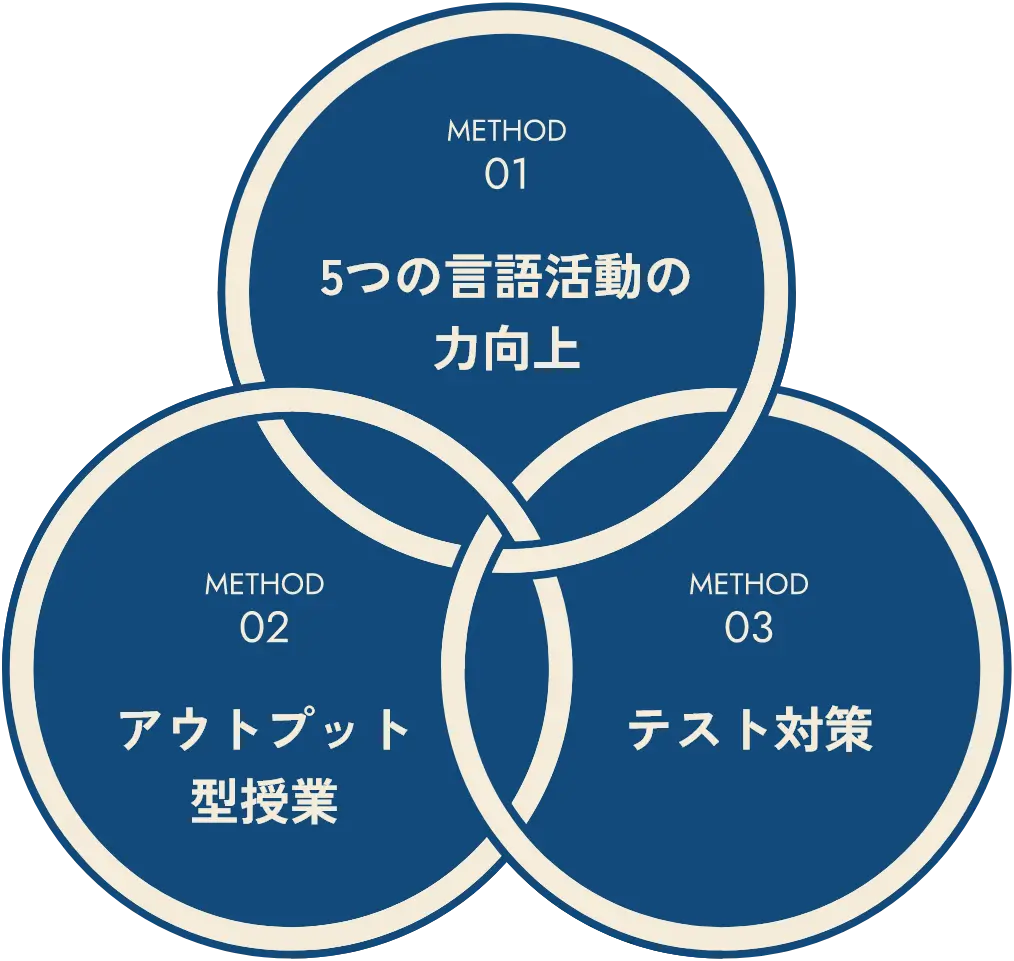

METHOD
01
Integrated Development of the Five Skills: Listening, Reading, Speaking (Interaction), Speaking (Presentation), and Writing
Through the five language activities of listening, reading, speaking (interaction), speaking (presentation), and writing, students systematically learn Japanese while comprehensively improving their skills. By studying various themes, they develop practical Japanese abilities applicable in real-life situations, academic advancement, and business contexts.
METHOD
02
Output-focused lessons focusing on presentation and conversation practice
We place particular emphasis on "output"—actively speaking about what you've learned. Through repeated activities like presentations and conversation practice, where you express yourself in your own words, you will steadily develop the ability to speak confidently. The skill of explaining yourself, essential for interviews when applying to schools or jobs, will also come naturally.
METHOD
03
Comprehensive test preparation for JLPT, EJU, and other exams
For the JLPT and EJU, which are essential for university admission and employment, instructors provide personalized advice on exam levels and subjects based on students' desired career paths. Preparation classes systematically strengthen the skills needed to achieve target scores through: - Instruction on effective test-taking strategies tailored to each exam's characteristics - Individualized follow-up based on weakness analysis - Regular mock tests to assess progress
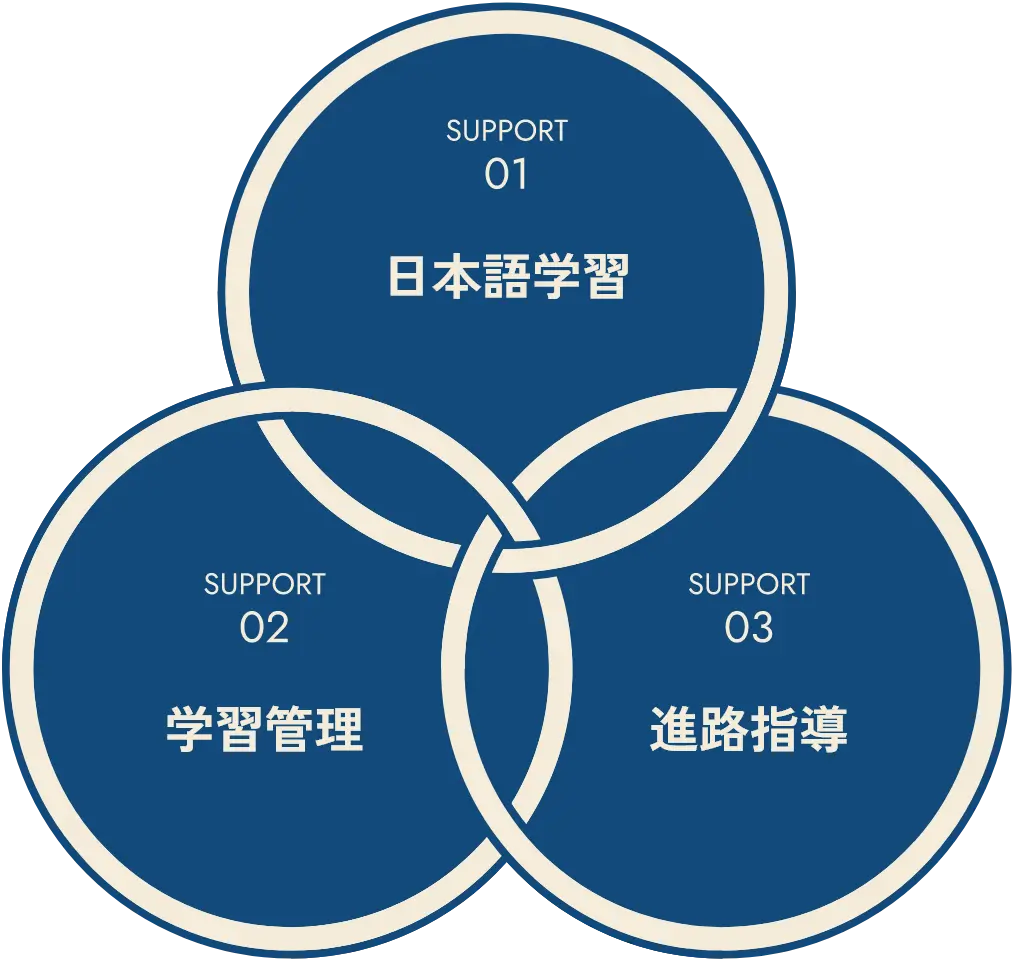
SUPPORT
01
A thorough Japanese language learning support system that supports every student from multiple perspectives
Each class is assigned a homeroom teacher who develops detailed lesson plans tailored to student attributes. We employ "team teaching" with multiple instructors to ensure students interact with diverse Japanese speakers. The homeroom teacher serves as a hub, fostering close collaboration among instructors teaching the same class to support each student's growth through multifaceted perspectives.
SUPPORT
02
Supporting the development of self-directed learning management skills
During the weekly “Homeroom Guidance" sessions, students record their study plans in their portfolios based on their goals for studying in Japan and their future objectives.
By sharing their study plans and career information with their homeroom teachers and classmates, students regularly review and adjust their plans. Through this process, we support students in developing the ability to manage their own learning independently.
SUPPORT
03
Dedicated academic/career guidance
Our homeroom teachers and career guidance staff provide comprehensive support for students' academic and career goals. Through guidance sessions and individual advising, we assist students throughout the entire university application process—from selecting suitable institutions and preparing application documents, including the statement of purpose, to interview preparation and enrollment procedures after acceptance.
Students who wish to enter Tokyo International University can also take advantage of a variety of exclusive benefits available only to students of its affiliated Japanese language school.
For students seeking employment in Japan, we offer practical support such as resume writing and interview preparation, helping them build a successful career after graduation.
Campus Facilities
We provide modern facilities and comfortable spaces designed to enhance learning and communication.
Wi-Fi is available throughout the entire school building, allowing students to access the internet from anywhere on campus. The school also features a library and PC room, as well as self-study areas. Classrooms are available for self-study whenever classes are not in session.
In addition, the lounge areas and terrace provide comfortable spaces for intellectual exchange, communication, and relaxation.
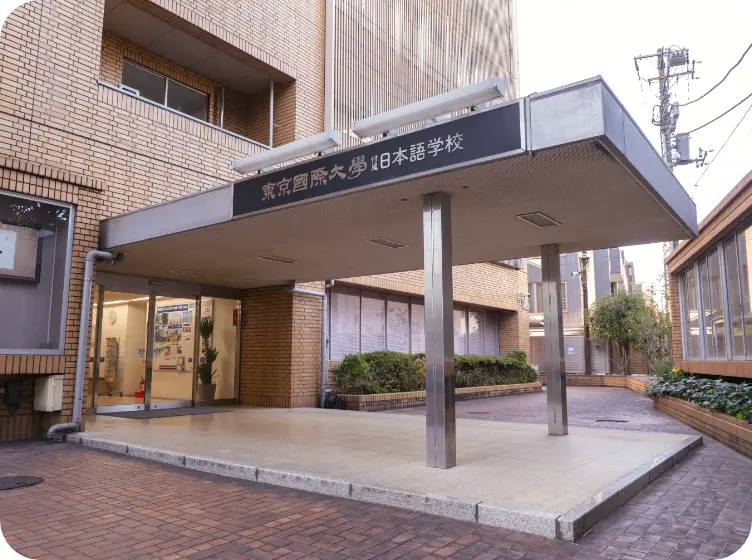
School Building Entrance
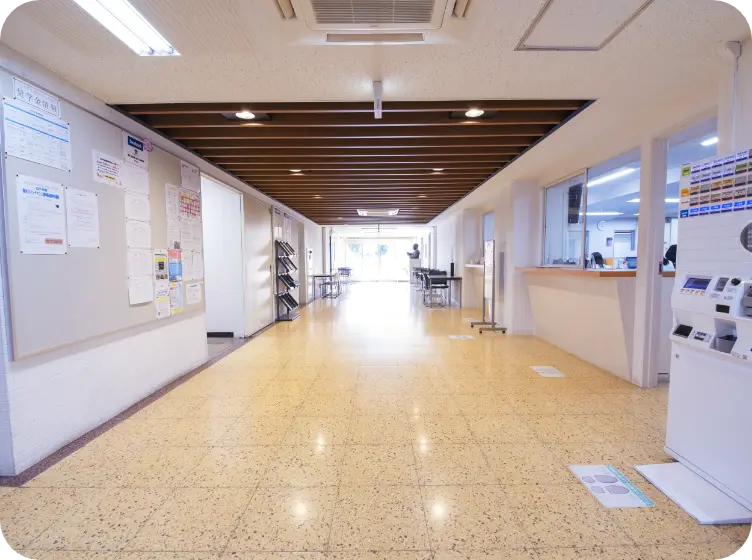
First-Floor Lobby
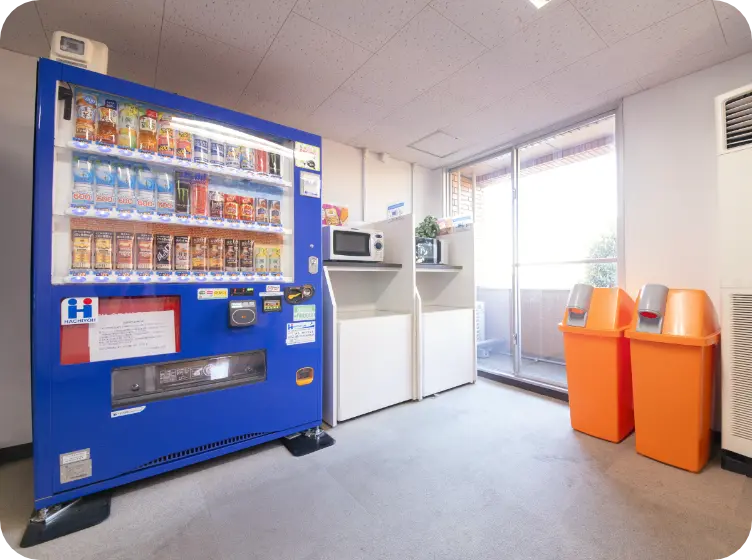
Amenities
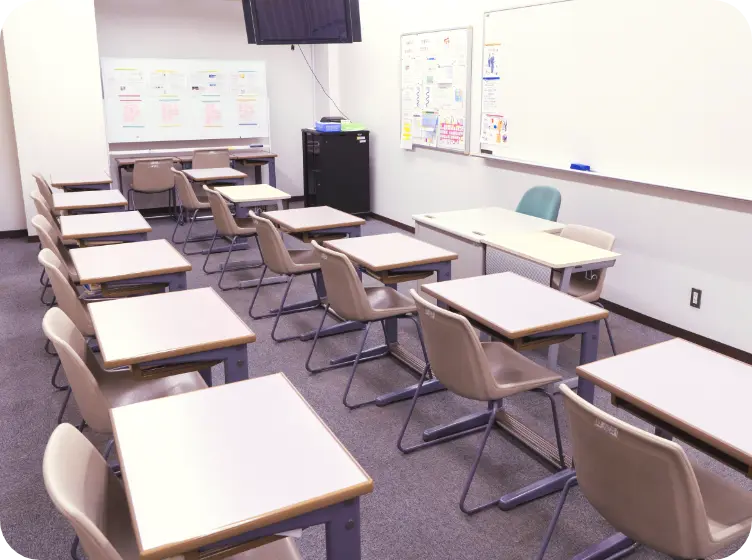
Classroom
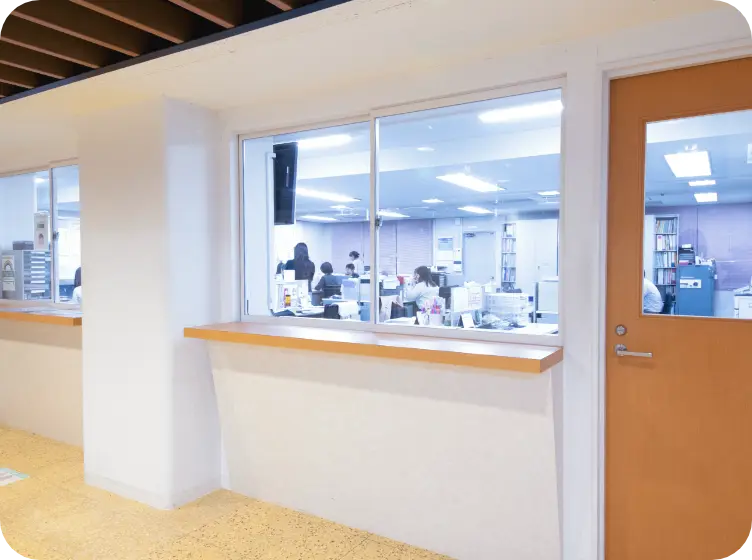
School Office
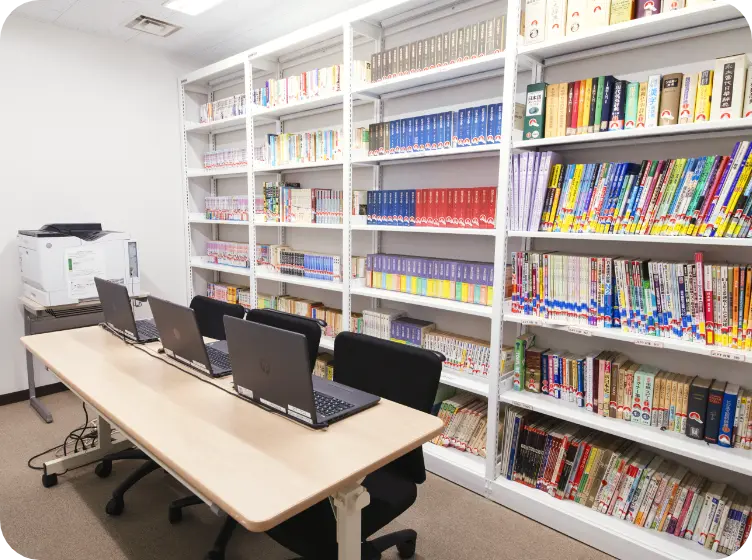
Library & Computer Lab
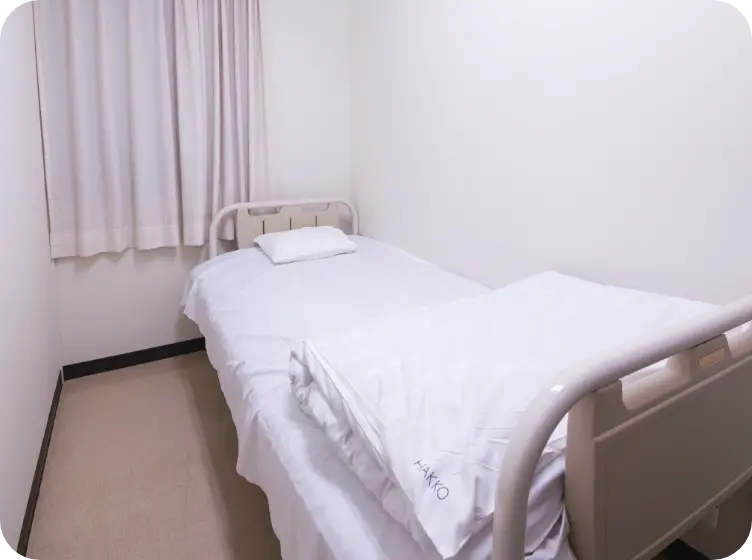
First-aid Room
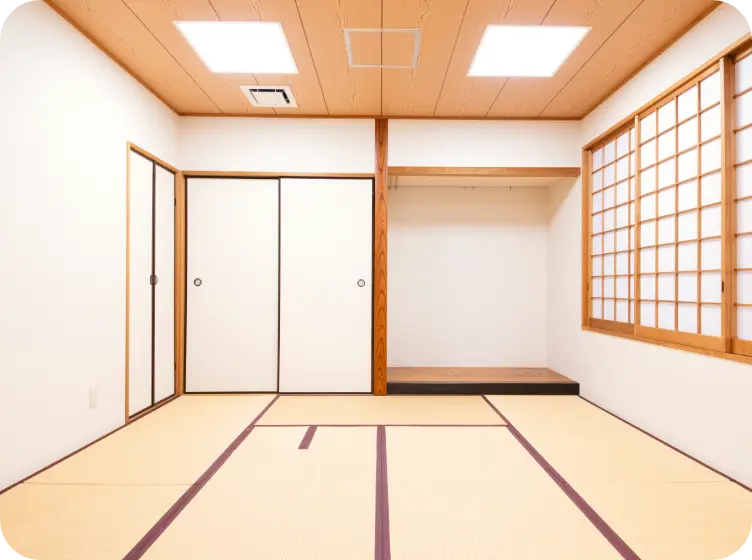
Japanese Tea Room
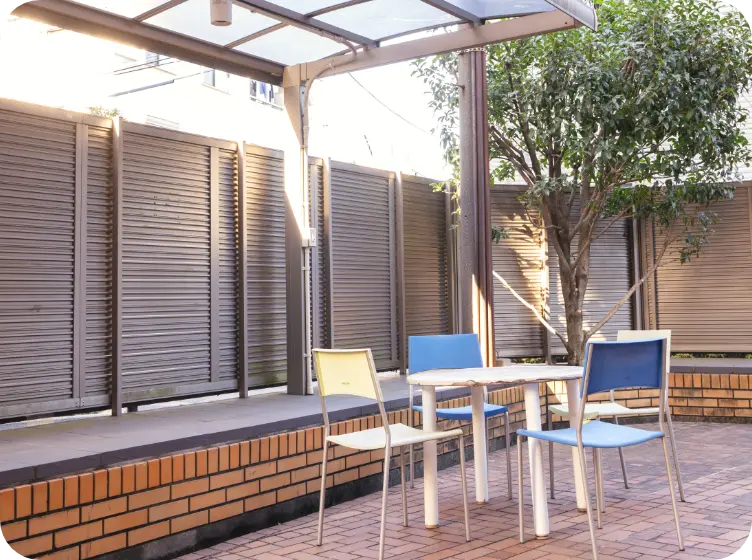
Terrace
Our History
- April 1987
-
Japanese Language School Affiliated with Tokyo International University (Takadanobaba, Shinjuku Ward, Tokyo)
- April 1990
-
Become an institution certified by the Foundation for the Promotion of Japanese Language Education
- April 1997
-
The Ministry of Justice has designated the school as eligible for the 1-Year visa, which does not require a guarantor in Japan.
- April 1998
-
Certified by the Ministry of Justice as an authorized school for student visa applications
- May 2000
-
Tokyo Metropolitan Japanese Language Education Promotion Association: Approved for Increased Capacity (Total Capacity: 310 Students)
- November 2001
-
Designated by the Ministry of Education, Culture, Sports, Science and Technology (MEXT) as a Preparatory Education Program institution.
- September 2007
-
New School Building Completed
- May 2008
-
Approved for an increase in student capacity by the Tokyo Metropolitan Government and the Association for the Promotion of Japanese Language Education (total capacity: 340 students)
- May 2009
-
Approved for an increase in student capacity by the Tokyo Metropolitan Government and the Association for the Promotion of Japanese Language Education (total capacity: 440 students)
- April 2011
-
School Building Relocation (4-23-23 Takadanobaba, Shinjuku-ku, Tokyo)
- April 2012
-
Introduced both full-time and half-day programs, and renamed the courses to the University Preparatory Course and the General Course.
- October 2016
-
Approved by the Tokyo Metropolitan Government for increased capacity (total capacity: 460 persons)
Course Name Changes ( Japanese Education Course A, Japanese Education Course B )
- July 2017
-
Japanese Language Education Course A
July Intake - October 2021
-
Recognized as an Appropriate School (Excellent School) by the Tokyo Regional Immigration Bureau; has continued to receive the same recognition every year since then.
- October 2023
-
Certified as an Appropriate School (Class 1) by the Tokyo Regional Immigration Bureau. Subsequently, this certification is renewed annually.
- April 2025
-
Launch "Special Bridge Program to Proceed to Tokyo International University(BP)"
Short-Term Training Program Hosting Record
Taiwan / Yuda High School
Taiwan / Meitoku High School
Taiwan / Meitoku Girls' High School
Taiwanese School (East China Taiwanese Business Families School)
Taiwanese School (Dongguan Taiwanese Businessmen's Children's School)
South Korea / LG
Korea / Pukyong National University
Korea / Hankyong University
Korea / Hankuk University of Foreign Studies
Korea / Kongnam University
South Korea / Kyung Hee University
Korea / Se-Myung University
Hong Kong / Maryknoll Convent School
Hong Kong / Chinese Language School
Hong Kong / Hong Kong Institute of Management Professionals Li Kwok Po Secondary School
Hong Kong / Hong Kong Professional Continuing Education School Junior High
Hong Kong / Hong Kong Yao Zhong Language Arts Education Center
Hong Kong / Kōchō Junior High School
Hong Kong / The Anglican Lam Wu Memorial Secondary School
Hong Kong / St. Francis' College
Hong Kong / Chinese Evangelical Mission Liu Yongsheng Middle School
Hong Kong / Tokutei Girls' Middle School
Hong Kong / La Salle College
Hong Kong / Tsuen Wan Public Ho Chun Yiu Memorial Secondary School